IBS and Eczema: The Gut-Skin Connection and Food Triggers
I didn't start researching food triggers because I was interested in gut health.
I started because of my son, Caleb.
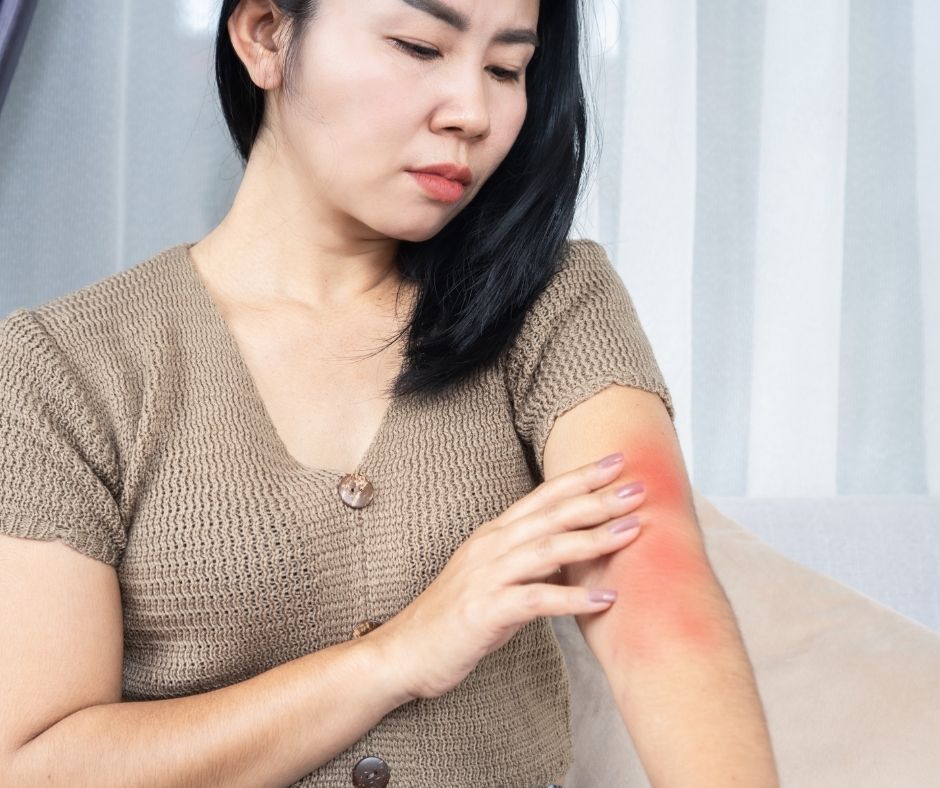
Caleb kept breaking out. His skin would become red, irritated, and itchy, and I couldn't figure out why it kept happening. His doctor told us he had eczema, which answered one question.
But I still had another.
What kept making it flare up?
So I began paying closer attention to what Caleb ate and what happened to his skin afterward.
He loved pasta. All pasta.
Mac and cheese was his favorite. He drank milk throughout the day, ate bread regularly, and pasta was a normal part of his meals.
At first, I couldn't tell whether dairy, wheat, another ingredient, or something completely unrelated was contributing to his flare-ups.
Over time, though, gluten-containing foods became the strongest food trigger pattern we noticed with Caleb. He stopped eating regular bread, and we began paying much closer attention to the wheat and gluten in the foods he ate.
That experience changed the way I thought about food and symptoms.
Then there was my mom.
After having her gallbladder removed, she began dealing with digestive problems. Some meals seemed to bother her much more than others, and once again I found myself asking:
What did she eat before this happened?
Now two people I loved were dealing with completely different problems.
My mom's symptoms were mostly digestive.
Caleb's showed up on his skin.
And that made me wonder:
Could what happens in the gut sometimes be connected to what happens on the skin?
I spent months researching IBS, eczema, food triggers, food sensitivities, and the possible connection between gut and skin symptoms.
That's when I came across the gut-skin axis.
Researchers are still learning exactly how it works, but there is growing interest in the relationship between the gut microbiome, immune system, intestinal barrier, and inflammatory skin conditions such as atopic dermatitis.
Quick takeaway: IBS does not directly cause eczema, and food is not behind every eczema flare. But gut health, immune activity, food reactions, and skin inflammation can overlap in some people. Tracking meals alongside both digestive and skin symptoms may help reveal patterns that are easy to miss.
What Is the Gut-Skin Axis?
The phrase gut-skin axis sounds complicated.
The basic idea isn't.
Your gut and skin don't operate in completely separate worlds.
Your digestive system contains trillions of microorganisms, often called the gut microbiome. Your immune system is constantly interacting with what happens inside your digestive tract.
Researchers are looking at how changes in gut bacteria, immune signals, and the intestinal barrier may influence other parts of the body, including the skin.
That does not mean your stomach is secretly responsible for every rash.
Far from it.
Eczema can flare because of dry skin, weather, soaps, fragrances, detergents, stress, allergens, irritants, and many other factors.
Food is only one possible piece of a much larger puzzle.
Still, when someone has digestive problems and recurring skin flare-ups, it can be useful to track both instead of automatically treating them as two unrelated events.
How Gut Health May Affect the Skin
You may have heard the phrase "leaky gut."
It gets used online for almost everything, so it helps to separate the real idea from the internet version.
Your intestines have a protective lining. Think of it as a very selective gate.
It allows nutrients to move through while helping keep bacteria and other unwanted substances where they belong.
Researchers use the term increased intestinal permeability when that barrier becomes more permeable than normal.
Scientists are studying whether changes in the intestinal barrier and gut microbiome can influence immune signals elsewhere in the body.
One place they are looking is the skin.
But this is important:
Having eczema does not automatically mean you have a "leaky gut," and having IBS does not mean your gut is causing your eczema.
The connection is more complicated than that.
That is exactly why tracking your own symptoms matters more than following a sweeping list of foods someone on the internet says you should never eat again.
IBS and Atopic Dermatitis: What May They Have in Common?
IBS and eczema are two different conditions.
IBS commonly involves recurring abdominal pain along with changes in bowel movements, including diarrhea, constipation, or both.
Atopic dermatitis, the most common form of eczema, is a chronic condition that causes dry, irritated, itchy skin.
So why are researchers looking at them together?
Part of the answer may involve the immune system.
Certain immune cells called mast cells are found in both the digestive tract and skin.
When activated, mast cells can release histamine and other chemicals.
You probably recognize the word histamine from allergies and antihistamines. Histamine can contribute to itching and redness in the skin. Researchers have also looked at mast cells and histamine because they may play a role in abdominal pain and sensitivity in some people with IBS.
This doesn't mean histamine explains everyone's symptoms.
It does help show why the gut and skin may have more in common than they first appear to.
Research has also found an association between IBS and atopic conditions, including atopic dermatitis. An association does not mean one condition causes the other, but it gives researchers another reason to keep studying the connection.
Common Food Triggers for IBS and Skin Symptoms
This is where things can get confusing quickly.
There is no universal "IBS and eczema diet."
There is also no single list of foods everyone with eczema should avoid.
Your trigger may be a food someone else eats every day without a problem.
Sometimes the food you suspect may not be the culprit at all.
Still, a few groups of foods often come up when people begin investigating digestive symptoms, skin reactions, or both.
High-FODMAP Foods
FODMAPs are certain carbohydrates that can be difficult for some people to absorb.
They can draw water into the intestines and ferment in the gut, which may lead to symptoms such as:
- Bloating
- Gas
- Abdominal pain
- Diarrhea
- Constipation
High-FODMAP foods can include certain portions of:
- Garlic
- Onions
- Wheat-based foods
- Apples
- Pears
- Beans and legumes
- Some dairy products
- Certain sweeteners
A low-FODMAP approach can help some people manage IBS symptoms.
But a low-FODMAP diet is not an established treatment for eczema.
That distinction matters.
Histamine-Rich Foods
Histamine occurs naturally in your body, but it is also present in some foods.
Foods that may contain higher amounts include:
- Aged cheeses
- Fermented foods
- Processed meats
- Wine and other alcoholic beverages
Some people report symptoms such as flushing, itching, headaches, stomach discomfort, or digestive changes after eating certain foods in this category.
But symptoms alone do not prove you have histamine intolerance.
This is another situation where keeping a record can be more useful than immediately eliminating a long list of foods.
Dairy
Dairy gets blamed for a lot.
But saying "dairy bothers me" can actually describe very different problems.
Lactose intolerance happens when your body has trouble digesting lactose, the natural sugar in milk. It usually causes digestive symptoms such as bloating, gas, cramping, or diarrhea.
A milk allergy is different. It involves the immune system and can cause symptoms that affect the skin, digestive system, breathing, or other parts of the body.
Those two things are not interchangeable.
I learned how difficult this can be while watching Caleb.
He drank a lot of milk and loved mac and cheese.
But mac and cheese contains dairy and wheat pasta.
If his skin flared afterward, simply blaming "mac and cheese" wouldn't tell me which ingredient was involved, or whether the meal had anything to do with the flare at all.
That's where repeated patterns become useful.
Gluten and Wheat
Gluten is a protein found in wheat, barley, and rye.
For someone with celiac disease, gluten triggers an immune response and needs to be avoided.
But celiac disease isn't the only reason someone may feel worse after eating wheat.
Some people without celiac disease report digestive symptoms after eating wheat or gluten. Wheat also contains fructans, a type of FODMAP, which means the problem may not always be gluten itself.
That makes trying to diagnose yourself based on symptoms surprisingly difficult.
For Caleb, foods containing gluten were the clearest food-trigger pattern we noticed, especially considering how often bread and pasta had been part of his diet.
That was valuable information for our family.
It does not mean everyone with eczema should stop eating gluten.
If you suspect celiac disease, speak with a healthcare professional before removing gluten completely. Going gluten-free before testing can make it more difficult to get accurate results.
How to Find Your Personal IBS, Eczema, and Food Triggers
This is the part I wish I had understood sooner.
You don't necessarily need to start by removing ten foods from your kitchen.
Start by collecting information.
Step 1: Track Food, Digestion, and Skin Symptoms Together
Many food diaries focus on one thing.
Calories.
Meals.
Bowel movements.
But if you're trying to understand whether your digestive and skin symptoms overlap, you need a wider view.
Record what you eat along with symptoms such as:
- Bloating
- Stomach pain
- Gas
- Diarrhea or constipation
- Changes in bowel movements
- Itching
- Redness
- Dry or irritated skin
- Rashes
- Eczema flare-ups
Also record when the symptom happened.
Timing can make all the difference.
Imagine eating several different foods during the day and waking up itchy the next morning.
Which food do you blame?
Breakfast?
Dinner?
The snack you forgot you ate?
Without a record, you're relying on memory.
After a few weeks of consistent tracking, repeated patterns may become easier to notice.
Step 2: Don't Eliminate Everything at Once
When something seems to make you feel bad, the natural reaction is to stop eating it.
Then maybe you stop another food.
And another.
No dairy.
No gluten.
No eggs.
No FODMAPs.
No histamine.
Pretty soon you're standing in the kitchen wondering whether an ice cube is still on the menu.
That isn't the goal.
Removing several foods at once also creates another problem: you may never know which food actually mattered.
And especially with children, unnecessary elimination diets can create nutritional problems.
If your tracking repeatedly points toward one particular food, you have something specific to discuss with your doctor or dietitian.
That is far more useful than randomly cutting several food groups at the same time.
For people using a low-FODMAP diet for IBS, the highly restrictive phase is generally meant to be temporary. It is followed by reintroducing foods to learn which FODMAPs actually trigger symptoms and which ones are tolerated.
The goal is personalization, not staying on the smallest diet possible forever.
Step 3: Use a Food and Symptom Tracker
This is one of the reasons I eventually created FoodTrigger AI.
Trying to remember everything you ate three days ago gets difficult fast.
A notebook can work.
Your phone's notes app can work.
The important part is collecting enough information to look back and recognize patterns.
FoodTrigger AI was designed to make that easier by keeping meals and symptoms together.
You can log what you eat, record what happens afterward, and review patterns over several days instead of trying to reconstruct everything from memory.
FoodTrigger AI doesn't diagnose food allergies, intolerances, IBS, eczema, or other medical conditions.
It helps you answer a simpler question:
"Does this keep happening after I eat the same food?"
Sometimes the answer will be no.
That is useful too.
Other times a pattern may keep appearing.
Now you have something specific to investigate and, if needed, something useful to show your doctor or dietitian.
When Should You See a Doctor?
Tracking can help you collect information.
It should not turn serious symptoms into a home experiment.
Talk with a healthcare professional if your digestive or skin symptoms are severe, persistent, getting worse, or interfering with everyday life.
Seek urgent medical care if you develop signs of a serious allergic reaction after eating, such as:
- Trouble breathing or swallowing
- Swelling of the lips, tongue, face, or throat
- Fainting or severe dizziness
- A sudden widespread reaction
You should also talk with a healthcare professional about symptoms such as blood in your stool, unexplained weight loss, severe or ongoing abdominal pain, or major unexplained changes in bowel habits.
A food tracker can help you bring better information to the appointment.
It cannot replace medical testing or treatment.
Frequently Asked Questions About IBS, Eczema, and Food Triggers
Can IBS cause eczema or a skin rash?
IBS is not considered a direct cause of eczema. However, researchers have found associations between IBS and atopic conditions such as atopic dermatitis. Researchers are also studying how the gut microbiome, immune system, and intestinal barrier may connect digestive and skin health. Having both conditions does not prove that one caused the other. But if you experience digestive problems and recurring skin flare-ups, tracking them together may help you notice whether they follow similar patterns.
How long after eating can an eczema flare happen?
There isn't one timeline that applies to everyone. Some food-allergy reactions happen quickly, while other skin changes may appear later. Eczema can also flare for reasons completely unrelated to food. That's why looking only at the last thing you ate can be misleading. Tracking meals and symptoms over time gives you a better chance of noticing repeated patterns.
Will a low-FODMAP diet help eczema?
A low-FODMAP diet is primarily used to help identify and manage digestive triggers in people with IBS. It may improve symptoms such as bloating, abdominal discomfort, diarrhea, or constipation in some people with IBS. It has not been established as a treatment for eczema. If your digestive symptoms improve while following a low-FODMAP approach, that's useful information, but it doesn't necessarily mean the diet is treating your skin condition.
Can dairy cause digestive and skin symptoms?
Yes, but the reason matters. Lactose intolerance usually causes digestive problems because the body has trouble digesting lactose. A true milk allergy involves the immune system and may cause skin, digestive, breathing, or other symptoms. They require different approaches, which is why it's important not to diagnose the problem based on symptoms alone.
Should I stop eating gluten if I have IBS and eczema?
Not automatically. Some people notice symptoms after eating wheat or gluten, but there can be several possible reasons. If celiac disease is a possibility, speak with a healthcare professional before going gluten-free because testing is generally more accurate while gluten is still part of your diet. Start with information rather than assumptions.
Can tracking food really help identify eczema triggers?
Tracking cannot prove that a food caused eczema. What it can do is reveal repeated patterns. If the same food keeps appearing before a flare, you now have something specific to investigate instead of relying on memory. And if no pattern appears? That can save you from unnecessarily avoiding a food you enjoy.
The Bottom Line: Look for Patterns, Not Perfect Answers
Watching my mom struggle with digestive problems and Caleb deal with eczema taught me something simple.
Knowing what happened is usually the easy part.
Figuring out why it happened is much harder.
When symptoms appear hours later, remembering what you ate can be surprisingly difficult.
Add several ingredients to a meal and it gets even harder.
That's why I became so interested in tracking food and symptoms together.
You don't have to blame every meal.
You don't have to remove half the food from your kitchen.
And you don't have to assume every skin flare starts in your gut.
Start by paying attention.
Track what you eat.
Record what happens afterward.
Give yourself enough time to see whether something keeps repeating.
Sometimes the pattern you expected won't be there.
Sometimes you'll notice one you never expected.
Either way, you're working with information instead of guesswork.
That is why I created FoodTrigger AI: to make it easier to keep your meals and symptoms together and look for patterns over time.
Because "What did I eat?" shouldn't be such a hard question to answer.
FoodTrigger AI is a tracking and pattern-identification tool. It does not diagnose, treat, cure, or prevent any medical condition and is not a substitute for professional medical advice, diagnosis, or treatment. Talk with a qualified healthcare professional about persistent, severe, or concerning symptoms.